
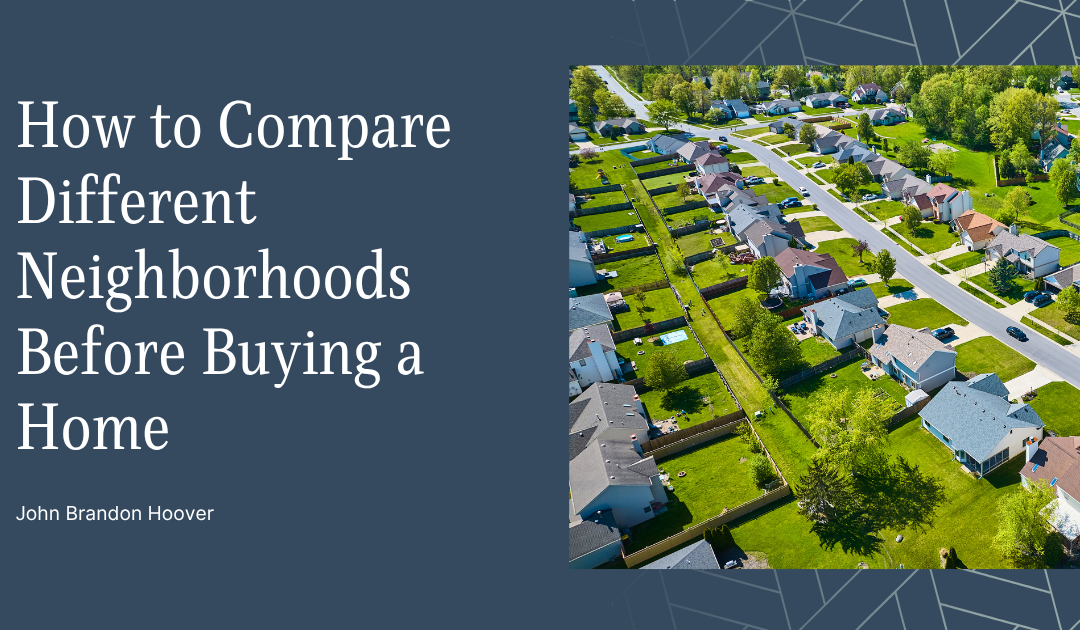
Buying a home is about more than choosing the right property. The neighborhood you choose can have a major impact on your daily routine, property value, expenses, and overall quality of life. Two homes with similar prices and features can offer very different experiences depending on their surroundings. That’s why it is important to compare neighborhoods carefully before making a decision.
Here are some key factors to consider when evaluating different neighborhoods.
1. Check the Location and Connectivity
Start by looking at how conveniently the neighborhood connects to the places you visit regularly. Consider the distance to your workplace, schools, shopping areas, hospitals, railway stations, airports, and major roads.
Good public transportation and easy access to main roads can make daily commuting more convenient. However, remember that a neighborhood that is centrally located may also have higher property prices and more traffic.
2. Research Safety and Security
Safety should be an important consideration when comparing neighborhoods. Look into local crime statistics, street lighting, security arrangements, and general conditions around the area.
Visit the neighborhood at different times of the day, including evenings and weekends. This can give you a better understanding of traffic, noise levels, activity, and how comfortable you feel in the surroundings.
3. Look at Schools and Educational Facilities
If you have children or plan to start a family, nearby schools can be an important factor. Research schools, colleges, daycare centers, and other educational facilities in and around the neighborhood.
Even if you do not have children, areas with good educational institutions can attract families and potentially contribute to continued demand for housing.
4. Compare Amenities and Everyday Convenience
Think about the services you use regularly. Are grocery stores, pharmacies, restaurants, banks, gyms, parks, and healthcare facilities easily accessible?
A neighborhood with essential amenities nearby can save considerable travel time. Also check whether new shopping centers, hospitals, parks, or other infrastructure projects are planned for the area.
5. Evaluate Property Prices and Future Potential
Compare property prices across the neighborhoods you are considering. Look at the prices of similar homes rather than comparing properties solely by their total cost.
You should also research how property values have changed over time and whether the area has planned infrastructure developments. New roads, transportation links, commercial projects, or business hubs can influence future demand, although future development should never be treated as a guaranteed increase in property value.
6. Consider Noise, Traffic, and Environment
A neighborhood may look attractive during a short visit but feel very different during peak hours. Visit the area at different times to assess traffic congestion, noise, parking availability, air quality, and general cleanliness.
Pay attention to the distance from busy highways, industrial areas, railway lines, airports, or entertainment venues if you prefer a quieter environment.
7. Talk to Local Residents
One of the best ways to understand a neighborhood is to speak with people who already live there. Ask residents about water supply, power reliability, maintenance, traffic, security, community life, and any recurring local issues.
Online reviews and local community groups can also provide useful perspectives, but verify important information independently.
8. Create a Neighborhood Comparison Checklist
Before making a final decision, create a simple comparison table covering factors such as price, commute time, safety, schools, healthcare, amenities, public transport, environment, and future development.
Give each factor the importance it has for your household rather than relying on someone else’s priorities.
Final Thoughts
Choosing the right neighborhood requires more research than simply finding a house you like. By comparing location, connectivity, safety, amenities, schools, prices, environment, and future development, you can make a more informed home-buying decision.
Take your time, visit shortlisted neighborhoods more than once, and consider how each location fits your lifestyle and long-term plans. The right neighborhood should not only work for your needs today but also make sense for the life you expect to build there.